
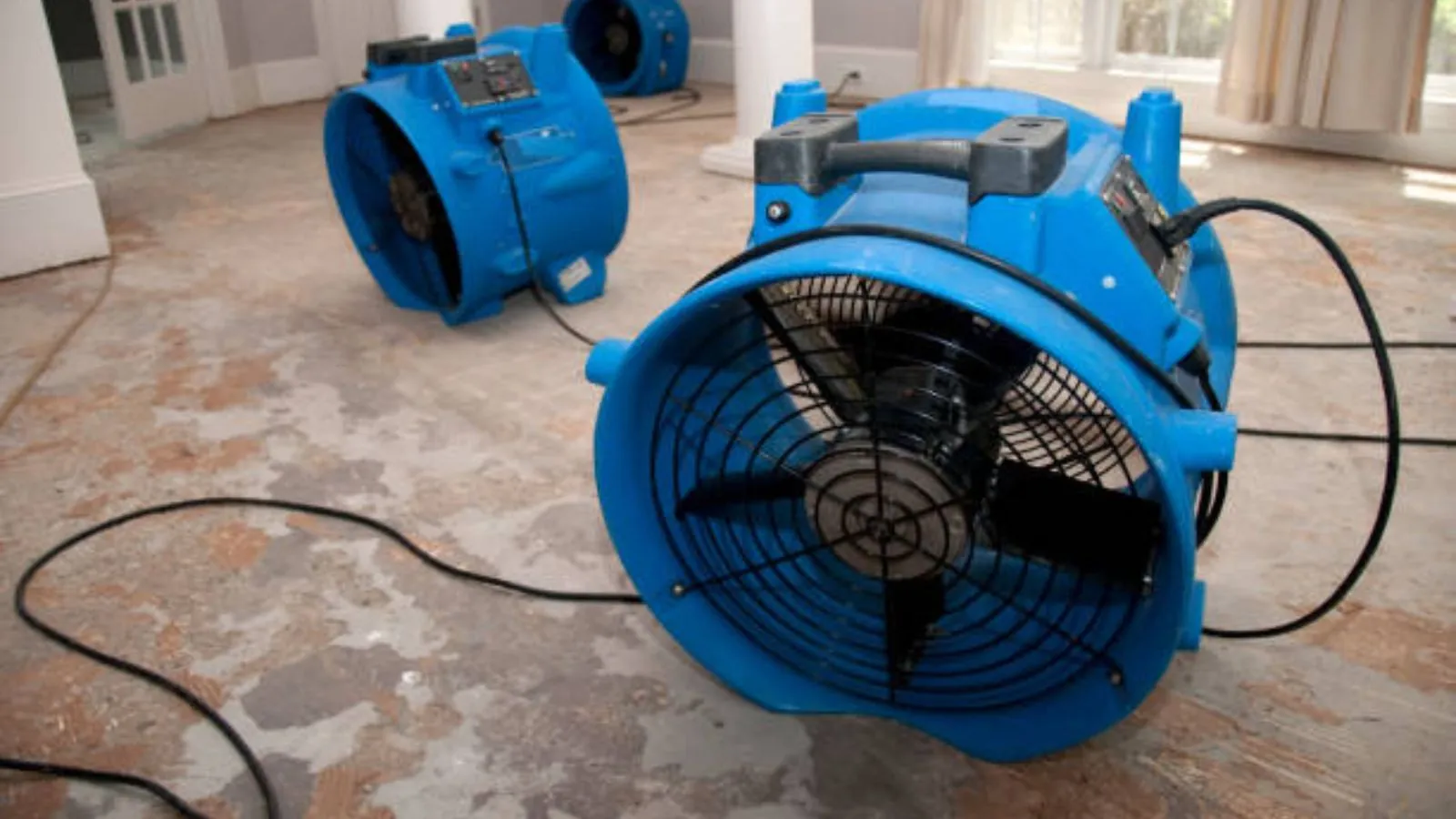
Wall and drywall water damage repair is the assessment, drying and repair of drywall, insulation and framing after a leak. Drywall is gypsum between sheets of paper, and the paper soaks water readily, so a wet wall can swell, stain, soften and grow mold if it stays damp. If you see a bubbling or soft wall in Palm City, FL, call the line and stop the source.
Do not press on a wet wall or hang things on it, because wet drywall crumbles. Pull furniture away from the wall and leave baseboards in place until a crew checks the cavity.
Signs water is in the wall
- Paint is bubbling, peeling or cracking.
- The wall is stained or has a brown ring.
- The surface feels soft, cool or damp.
- Baseboards are swollen or lifting.
- There is a musty smell with no visible source.
- Seams or nail heads are showing through the paint.
Surface signs are only part of the story. The water may be in the cavity behind a wall that looks fine. A moisture meter and thermal camera show the wet area, and small inspection holes check the insulation if needed.
Dry in place, or cut it out?
Not all wet drywall has to be removed. If the water was clean and the wall was not wet for long, the board can often be dried in place with air movers and dehumidifiers, sometimes with small holes at the base to let air in. If the drywall is crumbling, stained from dirty water or has been wet for days, it is cut out.
| Condition | Usual decision | Reason |
|---|---|---|
| Clean water, wet for a short time. | Dry in place. | Board keeps its strength and dries with airflow. |
| Soft, sagging or crumbling board. | Cut out and replace. | It has lost its strength. |
| Dirty or sewage water. | Cut out above the waterline. | Contaminated porous material. |
| Wet insulation behind the wall. | Remove insulation, dry the cavity. | Insulation holds water against the framing. |
| Growth visible. | Stop and see the mold page. | Treat the mold before closing the wall. |
How the repair is done
- Stop the sourceThe leak or opening is closed.
- Map the moistureMeters and thermal imaging mark the wet areas.
- Open or vent the wallBaseboards come off and cuts are made above the wet line when needed.
- Dry the cavityAir movers and dehumidifiers dry the framing and remaining board.
- Patch and finishNew drywall is hung, taped, textured and painted to match as closely as possible.
Cutting walls open is a last resort for some jobs and a first step for others. Drying methods are explained on the structural drying page. Walls under a leaking ceiling are covered on the ceiling page, and walls near sinks and appliances on the kitchen page.
Mold behind walls
Mold likes paper-faced drywall. If the wall has stayed wet for more than a day or two, or if there is a musty smell, a check for hidden growth is part of the plan. The mold remediation page explains how growth is handled. Closing a wall over wet or moldy material hides the problem and makes it worse.
Paint and texture matching
Matching texture and paint takes skill, especially on large walls. Ask whether the repaint will cover a full wall or only the repair, so the color and finish blend.
What shapes the cost of wall repair
Sudden leaks are often covered, and long-term seepage is often not. Check your policy and ask your insurer. Want your real number? Call (833) 521-1033.
Walls soft, stained or bubbling? Call the line for readings.
☎ Call (833) 521-1033What to do before the crew arrives
- Shut off the water at the main valve, or the appliance valve, if it is safe to reach.
- Turn off power to wet areas at the breaker if the panel is dry, and stay out of standing water near outlets.
- Do not use a household vacuum on water, and do not run ceiling fans under a wet ceiling.
- Move small valuables and papers to a dry room, and take photos and video of the damage for your records.
- Call 911 for any sparking, a sagging ceiling, or a strong gas smell before you call the restoration line.
The published ANSI/IICRC S500 standard is the reference for deciding whether wet drywall is dried in place or removed.
Wall and drywall work is part of nearly every job, from Palm City to Port Saint Lucie, Jensen Beach, Port Salerno, Hobe Sound and Indiantown.
Common questions
Do you handle wall water damage emergencies at night or on weekends in Palm City?
Yes. The 24/7 line takes calls at night and on weekends. Stop the source, keep away from wet outlets and call with what the wall looks like.
Can wet drywall be dried instead of replaced?
Sometimes, when the water was clean and the board is still firm. Readings and a visual check decide.
Why is my paint bubbling?
Bubbling paint usually means moisture is behind it. Find the source and have the wall checked.
Should I paint over a stain?
No. Painting over a wet or recently wet stain hides moisture and can trap mold.
Is wall water damage covered by insurance?
Often when sudden. Policies vary. Read your policy and ask your insurer.