
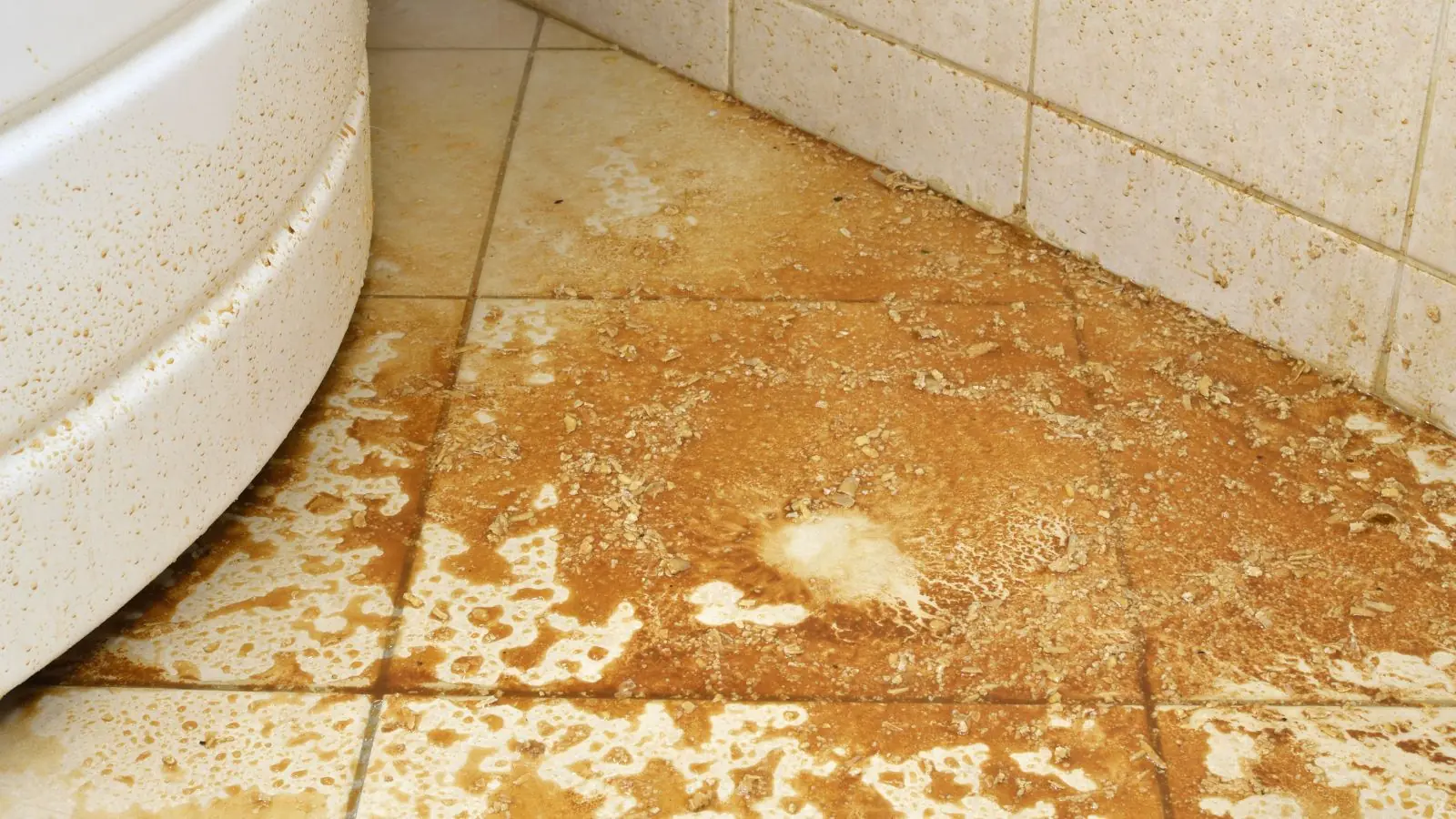
Appliance leak water damage is the wetting of floors, cabinets, walls and rooms below caused by a washing machine, dishwasher, refrigerator ice maker or similar appliance that leaks or overflows.
In Palm City, FL these leaks are common because the hoses are under constant pressure and few people look at them. If water is coming from an appliance right now, close its supply valve, unplug it if the outlet is dry and call the 24/7 line.
Most appliance supply valves are behind the machine or under the sink. A washer has two valves, hot and cold. A dishwasher is fed from a small valve under the kitchen sink. A refrigerator ice maker has a line with a saddle or shutoff valve behind the unit.
Appliance leak emergency: stop it, then call
- Close the supply valve or the main water shutoff.
- Unplug the appliance only if the outlet is dry and you are not standing in water.
- Do not pull the machine out if the floor is already soaked and the cord is wet.
- Lift items off the floor and photograph the source and the water.
- Call the 24/7 line and say which appliance and which floor.
Which appliances cause the most trouble
Washing machine
A burst or loose supply hose releases water continuously, and an overflowing drain standpipe can flood a laundry room in minutes.
Dishwasher
A failed inlet valve, door gasket or drain hose leaks under the machine, often into cabinets and flooring where it is hard to see.
Refrigerator and ice maker
A small line behind the fridge can drip for weeks and ruin the floor under the unit before anyone notices.
A washer on an upper floor is the most expensive case because the water drops through the floor and into a ceiling below. If that happened, the ceiling page explains the repair. A dishwasher leak is usually a kitchen water damage job, with cabinets and flooring to check.
Hidden leaks that look small
Not every appliance leak is a flood. A slow leak under a dishwasher or behind a fridge may only show as a warped floor edge, a soft baseboard or a musty smell, and by then the subfloor can be wet. Moisture meters and thermal imaging find the extent without tearing up the whole kitchen.
| What you notice | Possible source | What it can mean |
|---|---|---|
| Floor edge lifting near the kitchen sink. | Dishwasher supply or drain. | Water has been reaching the subfloor for some time. |
| Musty smell in the laundry area. | Washer hose or standpipe. | Moisture in the wall behind the machine. |
| Soft or stained floor in front of the fridge. | Ice maker line or drain pan. | Slow leak under the flooring. |
| Stain on the ceiling below a laundry. | Washer overflow. | Water has already moved down a floor. |
How the cleanup runs
The sequence is the same as for other supply water. Water is extracted, wet materials are checked with a meter, baseboards and toe kicks are opened where needed and drying equipment runs until readings are normal. Appliance water is generally clean, but a dishwasher drain or a washer drain can carry soap and food residue, which changes how it is treated.
After drying, flooring and cabinet work is scoped. Wood floors and carpet each have their own page because the repair decision is different.
Appliance repair is separate
The service tech or plumber fixes the hose, valve or machine. This line handles the water, the drying and the repairs to the building. Replace old rubber hoses with braided lines when the appliance is serviced.
What shapes the cost of an appliance leak
Insurance often responds to sudden appliance failures but may exclude repeated or long-term seepage. Check your policy and ask your insurer. Want your real number? Call (833) 521-1033.
Appliance leaking right now? Close the valve and call the 24/7 line.
☎ Call (833) 521-1033What to do before the crew arrives
- Shut off the water at the main valve, or the appliance valve, if it is safe to reach.
- Turn off power to wet areas at the breaker if the panel is dry, and stay out of standing water near outlets.
- Do not use a household vacuum on water, and do not run ceiling fans under a wet ceiling.
- Move small valuables and papers to a dry room, and take photos and video of the damage for your records.
- Call 911 for any sparking, a sagging ceiling, or a strong gas smell before you call the restoration line.
After an appliance leak, the published ANSI/IICRC S500 standard is the reference for sorting the water by category and deciding what can be dried in place.
Washer, dishwasher and refrigerator leaks are handled in Palm City 34990 as well as in Port Saint Lucie, Jensen Beach, Port Salerno, Hobe Sound and Indiantown. Tell the dispatcher which floor the appliance is on.
Common questions
Do you handle appliance leak emergencies at night or on weekends in Palm City?
Yes. The 24/7 line is open at night and on weekends. Close the appliance valve or the main, avoid standing water near plugs and call with the appliance and the rooms affected.
Can I pull the washer out to find the leak?
Only if the floor is dry and the cord is not wet. If water is already spreading, close the valve and call so the area can be made safe first.
Is a dishwasher leak a big deal?
It can be. Dishwasher leaks run under cabinets and into the subfloor where they stay hidden. A moisture check is the way to tell.
Do you repair the appliance?
No. A service technician or plumber repairs the machine or hose. This service dries and repairs the building.
Will insurance cover appliance water damage?
Often when the failure is sudden. Policies may exclude long-term leaks or maintenance issues, so read your policy and ask your insurer.