
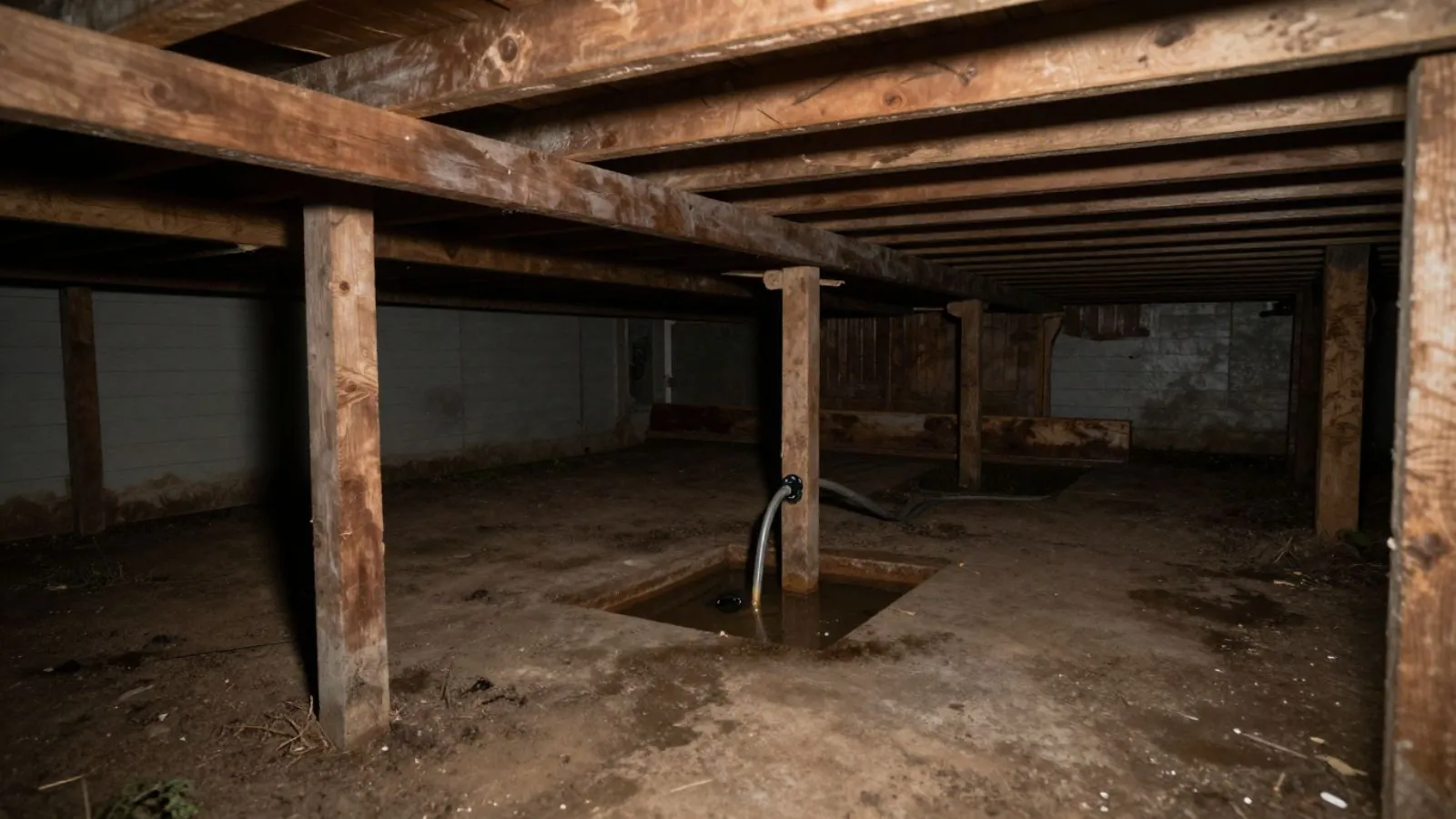
Crawl space water damage is the wetting of the low space under a raised house, along with the insulation, subfloor, ducts and framing there. Crawl spaces are less common in this part of Florida than slabs, but raised and older homes, additions and some pier-and-beam houses have them. If you have a musty smell, a soft floor or standing water under the house, call the line for an inspection.
A crawl space stays wet because it is closed, low and poorly ventilated. Water that gets in has nowhere to go, so it lingers, and the humidity rises into the house above.
How water gets under the house
The main sources are surface water from heavy rain, a plumbing leak, a failed drain line and groundwater that rises under the foundation. Poor grading, clogged gutters and downspouts that empty next to the foundation send water straight toward the crawl space.
Rain and runoff
Water flows toward the low point. If the soil slopes toward the house, it ends up under it.
Plumbing leaks
A supply or drain line under the house can leak for a long time with no sign upstairs.
High groundwater
In low, flat areas the water table can come close to the surface after long rain.
Signs of a wet crawl space
- A musty smell that gets stronger when the AC runs.
- Floors that feel soft, bouncy or cold.
- Insulation that is sagging, dark or falling down.
- Condensation on ducts and pipes under the house.
- Pest activity or fungal growth on wood.
- Standing water or damp soil visible at the access hatch.
If you do not feel safe crawling under the house, you do not need to. The crew can inspect it with the right equipment and protective gear, take readings and explain what they found before any work starts.
What the cleanup involves
- Inspect and photographThe crew looks for standing water, wet insulation and damp framing, and takes moisture readings.
- Remove the waterA pump clears standing water. In a low space this is slow work and needs patience.
- Remove wet insulationInsulation that has soaked is removed because it holds water against the subfloor.
- Dry and dehumidifyFans and dehumidifiers run until the wood reads dry.
- Check for growthWood and soil are checked for mold. See the mold remediation page if growth is found.
| Condition | What it means | What usually follows |
|---|---|---|
| Standing water. | Recent flooding or a leak. | Pumping, then drying and a check for the source. |
| Damp soil, no standing water. | Past flooding or high humidity. | Dehumidification and moisture control. |
| Wet, dark insulation. | Long exposure to moisture. | Removal and replacement of the insulation. |
| Musty air above. | Vapor moving up from the space. | Drying below and checking the floor above. |
Prevention is a drainage question
Stopping crawl space water usually means fixing where water goes outside. Extend downspouts away from the foundation, regrade soil so it slopes away from the house and check any sump pump. A contractor decides whether a vapor barrier or encapsulation makes sense. This service dries the space. It does not do foundation or drainage work.
If water has come up from the street or a yard during a storm, see the flood damage page. If the moisture is high but the water is gone, the structural drying page covers dehumidification.
What shapes the cost of a crawl space cleanup
Insurance often covers sudden water from a plumbing break but not seepage or groundwater, and flood coverage is separate. Check your policy and ask your insurer. Want your real number? Call (833) 521-1033.
Water or a musty smell under the house? Call the line for an inspection.
☎ Call (833) 521-1033For wet crawl spaces, the published ANSI/IICRC S500 standard covers drying and the point where mold work under S520 becomes a separate question.
Raised and older homes near the river and creeks may have a crawl space. Inspections are offered in Palm City and in Jensen Beach, Port Salerno, Hobe Sound, Port Saint Lucie and Indiantown.
Common questions
Do you handle crawl space water emergencies at night or on weekends in Palm City?
Yes. The 24/7 line is open on nights and weekends. If water is standing under the house, avoid going in yourself and call with what you can see from the access point.
Is standing water in a crawl space dangerous?
It can be. It can hide electrical wiring, support mold and attract pests. Do not enter if water is near wiring, and call for help.
Can insulation be dried?
Wet insulation usually has to be removed, because it holds water against the wood and dries slowly.
Do you install vapor barriers or drains?
No. This service pumps, dries and repairs. A contractor does grading, drains and encapsulation.
Will insurance cover crawl space water damage?
It depends on the source. A burst pipe is often covered, while groundwater and flood often are not. Read your policy and ask your insurer.