
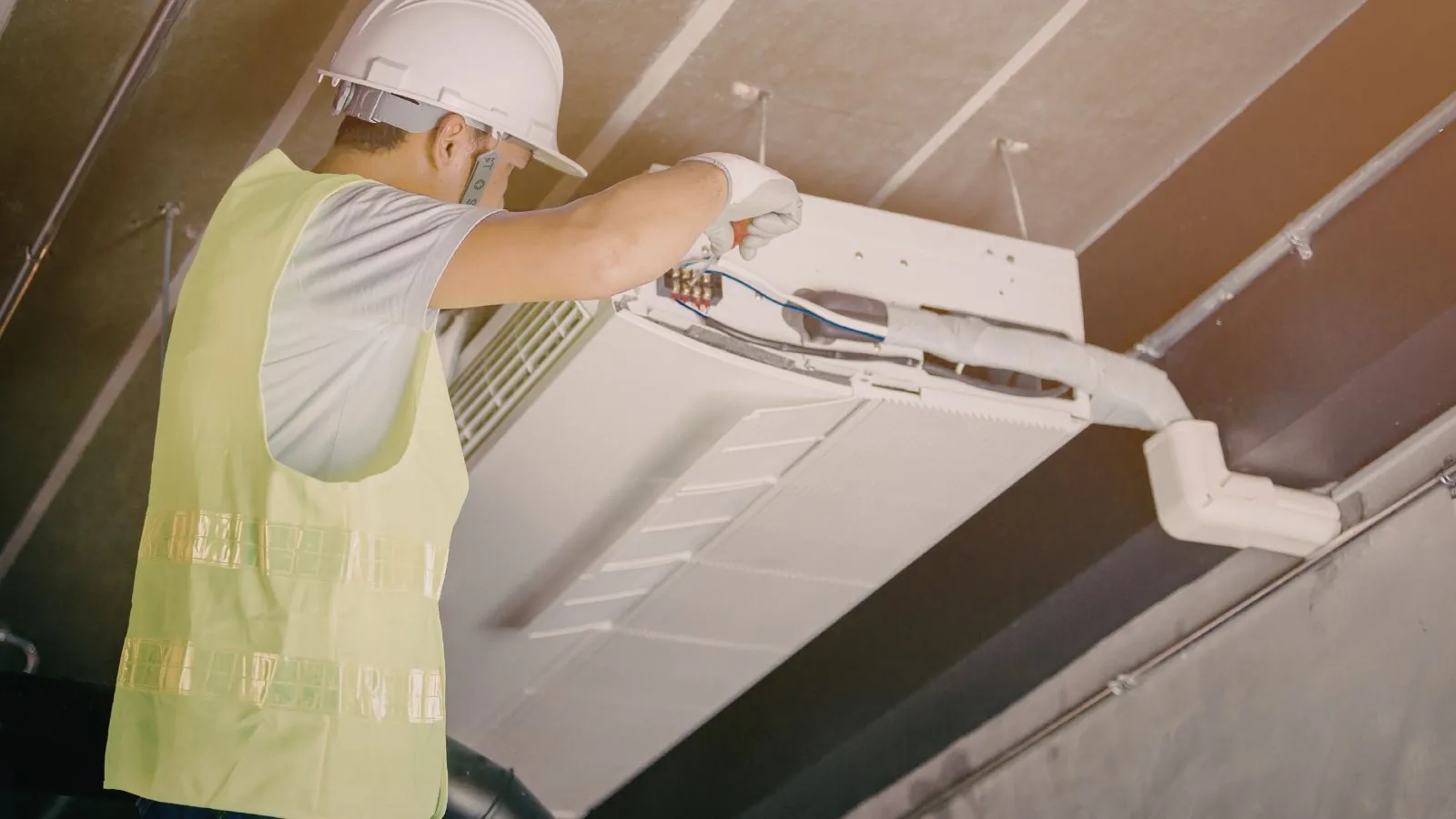
AC leak water damage is the wetting of ceilings, walls, closets and floors by water that escapes from an air conditioner, usually from a clogged condensate drain line, an overflowing drain pan or a leaking coil.
Air conditioners run for much of the year in Palm City, FL, and each system removes moisture from the air and sends it out through a drain. When that drain stops, the water has to go somewhere, and it often goes into the ceiling or the floor.
If you see water dripping from a vent, a stain below the air handler or a pan that is full, turn the AC off at the thermostat so it stops making more condensate, then call the 24/7 line. Do not keep running a unit that is dripping.
Why AC leaks are so common in warm, humid regions
An air conditioner pulls moisture out of the air as it cools. In a humid climate that can be several gallons a day, and all of it leaves through the condensate line. Algae and debris build up in that line and slow or block it. When it clogs, the drain pan fills and overflows, or a float switch trips if one is installed.
Air handlers are often in an attic, a hall closet or a garage. An attic unit that leaks soaks insulation first and shows up later as a stain on the ceiling. A closet unit leaks onto flooring and the base of the wall.
Clogged condensate line
The most common cause. The pan fills and overflows. It can be cleared by an HVAC tech, but the water that escaped still has to be dried.
Rusted or cracked drain pan
A pan that has aged out leaks even when the line is clear, and the water drips for a long time.
Frozen coil
Low airflow or low refrigerant can ice the coil. When the ice melts, a lot of water hits the pan at once.
What damage looks like
| Where the air handler is | What usually gets wet | What to check |
|---|---|---|
| Attic. | Insulation, ceiling drywall below, light fixtures. | Stain or sag near the unit, damp insulation, ceiling light fixtures. |
| Hall or utility closet. | Flooring, baseboards, wall base. | Floor edge, the wall behind the unit, nearby carpet. |
| Garage. | Concrete, stored items, framing near the base. | Boxes and walls near the handler. |
A slow AC leak is easy to miss. A faint musty smell, a stain that comes and goes with hot weather or a ceiling that feels damp may be the only clues. Because the water is cool and the air handler is running, the space around it is also humid, which makes mold more likely if the water sits.
Cleanup and what comes after
- Turn off the ACStop new condensate while the system is checked.
- Find the water pathMoisture meters and thermal imaging show where it went.
- Open and dryWet insulation and drywall are cut out if they cannot dry, and air movers and dehumidifiers run.
- Check for growthIf the leak was long term, hidden mold is checked for. See the mold remediation page for the next step.
- RepairCeiling, wall and flooring are rebuilt after readings are dry.
If the water landed in the ceiling, the ceiling water damage page explains the rebuild. If it hit the wall and floor, the wall and drywall page covers it. Drying equipment is covered on the structural drying page.
HVAC repair is separate
An HVAC technician clears the drain line, replaces the pan or repairs the coil. This line handles the water damage. Ask your HVAC company to install a float switch or schedule regular drain line cleaning so it does not happen again.
What shapes the cost of an AC leak cleanup
Insurance may respond to sudden overflow but often excludes damage from long-term leaks or lack of maintenance. Check your policy and ask your insurer. Want your real number? Call (833) 521-1033.
AC dripping through the ceiling or floor? Turn it off and call.
☎ Call (833) 521-1033What to do before the crew arrives
- Shut off the water at the main valve, or the appliance valve, if it is safe to reach.
- Turn off power to wet areas at the breaker if the panel is dry, and stay out of standing water near outlets.
- Do not use a household vacuum on water, and do not run ceiling fans under a wet ceiling.
- Move small valuables and papers to a dry room, and take photos and video of the damage for your records.
- Call 911 for any sparking, a sagging ceiling, or a strong gas smell before you call the restoration line.
If an AC drain line leaks into a ceiling or wall, professional drying follows the published ANSI/IICRC S500 standard, which is the reference for how wet drywall and insulation are judged.
Air conditioners run hard along this whole stretch of the Treasure Coast, so AC leak calls arrive from Palm City, Port Saint Lucie, Jensen Beach, Port Salerno, Hobe Sound and Indiantown alike.
Common questions
Do you handle AC leak emergencies at night or on weekends in Palm City?
Yes. The 24/7 line takes calls at night, on weekends and on holidays. Turn off the AC, protect the floor under the leak and call with where the handler is and what is wet.
Why is my AC leaking water inside?
The most common reason is a clogged condensate drain line. A cracked pan or a frozen coil can also cause it. An HVAC technician finds the cause.
Is it safe to keep the AC running?
No. A running unit keeps making water. Turn it off until the drain is cleared or the pan is repaired.
Can AC water damage cause mold?
Yes, if the water sits in insulation or drywall, especially near a humid air handler. Drying quickly lowers the risk.
Will insurance pay for AC leak damage?
It depends on the cause. A sudden overflow may be covered while a long-term leak may not. Read your policy and ask your insurer.