
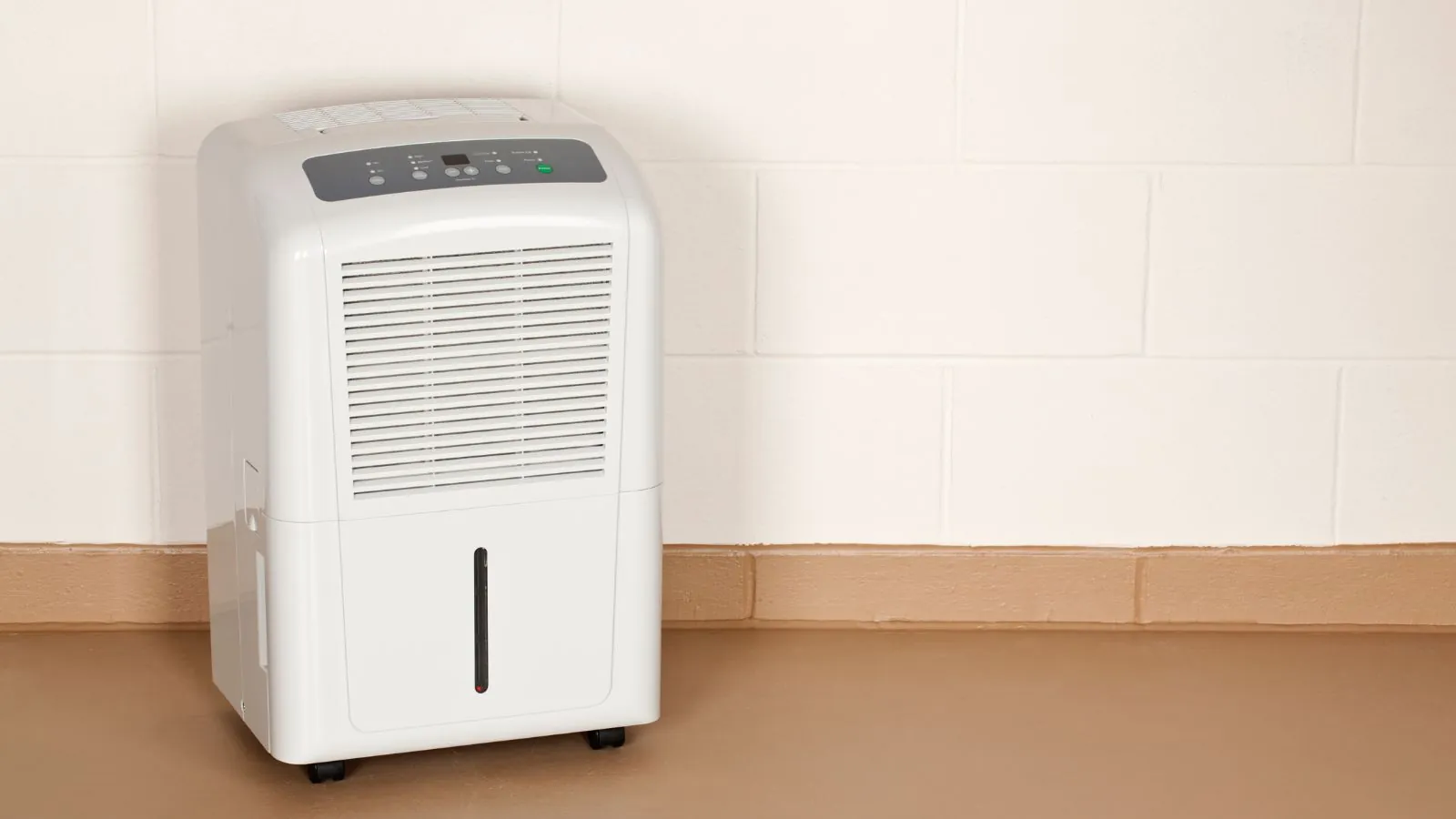
Structural drying and dehumidification is the controlled removal of moisture from walls, floors, ceilings and framing after a leak or flood, using air movers, dehumidifiers and moisture meters.
In a humid place like Palm City, FL, drying is a bigger job than it looks, because the air outside is already damp and the building does not dry on its own. If your home is wet and the water is already gone, call the line to set up drying.
Drying is judged by readings, not by how a surface feels. Drywall can feel dry on the outside while the wall cavity behind it is still wet. A meter and thermal camera show the difference, and daily readings show whether the drying is working.
Why drying is not just running a fan
A box fan moves air, but it does not remove moisture. Water that evaporates from a wet wall goes into the room air. If that air is not dehumidified, it condenses somewhere else. In a humid climate, that can mean the water just moves to another wall.
Professional drying is built on the idea that the water has to leave the building. Air movers speed evaporation from surfaces. Dehumidifiers pull the moisture out of the air and send it out as water. Together, they lower the humidity in the room so that the structure can give up its moisture.
Air movers
High-velocity fans push air across wet surfaces to speed evaporation, and are placed along walls and floors.
Dehumidifiers
Machines that pull water vapor out of the air and keep the room dry enough that materials keep drying.
Moisture meters and thermal imaging
Tools that find and track water in places the eye cannot see, and confirm that the structure has reached normal moisture levels.
Wet walls, damp floors and a musty smell
Many people reach this page with the symptoms and not the cause. A wall feels damp, a floor has gone cold, a smell will not leave or a room stays humid after a leak was fixed. Those are signs of moisture left behind. Hidden moisture can sit in insulation, under flooring and inside walls for weeks.
| What you notice | What may be going on | What the crew does |
|---|---|---|
| Wall feels cool or damp to the touch. | Moisture in drywall or insulation. | Meter readings and a thermal scan, then drying or selective opening. |
| Floor is cold or soft after a leak. | Water in the subfloor or slab. | Surface meter and probe readings, drying mats or vents. |
| Musty smell after cleanup. | Hidden moisture or early growth. | Reading the wall cavity, drying and a mold check if needed. |
| Room stays humid. | The structure is still releasing water. | Dehumidification until the room reaches normal conditions. |
How a drying job runs
- Map the moistureThe crew takes readings across walls, floors and ceilings and notes them as a baseline.
- Set the equipmentAir movers and dehumidifiers are placed based on the size of the wet area and the materials.
- Monitor dailyReadings are taken again, and equipment is moved or adjusted if a spot is lagging.
- Open what will not dryWet insulation or drywall that cannot dry in place is cut out so air can reach the cavity.
- Confirm dryEquipment comes out only when readings reach the dry standard for those materials.
Drying usually follows water extraction. It is also the way to deal with burst pipe damage and flood cleanup once the standing water is gone. If moisture has been present for several days, a check for growth is part of the plan, as described on the mold remediation page.
Dry does not mean done
Once the structure is dry, the repairs begin. Drywall, insulation, paint and flooring are replaced where they were removed. The scope is written before work begins, so you know what comes next.
What shapes the cost of drying
Insurance generally treats drying as part of covered water damage, but coverage depends on the cause. Check your policy and ask your insurer. Want your real number? Call (833) 521-1033.
Wet walls or floors? Call the line to set up readings and drying.
☎ Call (833) 521-1033What to do before the crew arrives
- Shut off the water at the main valve, or the appliance valve, if it is safe to reach.
- Turn off power to wet areas at the breaker if the panel is dry, and stay out of standing water near outlets.
- Do not use a household vacuum on water, and do not run ceiling fans under a wet ceiling.
- Move small valuables and papers to a dry room, and take photos and video of the damage for your records.
- Call 911 for any sparking, a sagging ceiling, or a strong gas smell before you call the restoration line.
Drying equipment is placed in Palm City and in Port Saint Lucie, Jensen Beach, Port Salerno, Hobe Sound and Indiantown. Monitoring visits are planned around the distance from the job to the crew.
Common questions
Do you handle structural drying at night or on weekends in Palm City?
Yes. The 24/7 line takes calls any time. Equipment can be set up at night when the damage is active, and monitoring visits are scheduled as the job requires.
How long does drying take?
It depends on the materials, the amount of water and the humidity. Light damage may dry in a few days. Heavy damage can take longer. Readings decide when it is done.
Can I dry my house with fans and a dehumidifier from the store?
For a small, surface-level spill, it can help. For wet walls, floors or insulation, rented or retail equipment rarely has the capacity or the monitoring.
Why is there equipment running for days?
Water stays inside materials after the surface looks dry. Equipment runs until readings return to normal.
Will drying prevent mold?
Quick, complete drying reduces the risk of mold, but it cannot remove growth that has already started.