
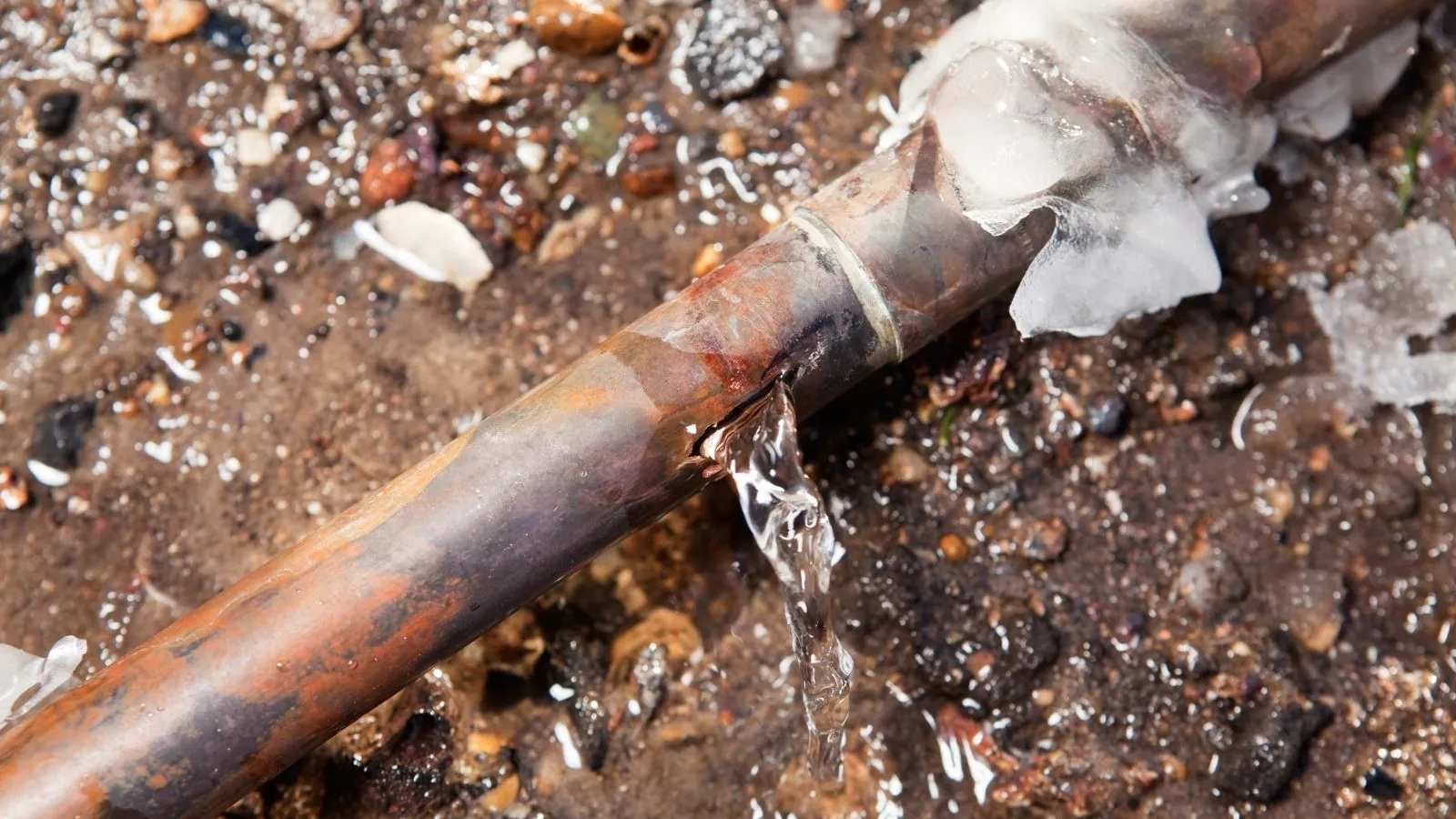
Burst pipe water damage is the wetting of walls, ceilings, floors and contents caused by a pressurized supply line that splits, pops a fitting or pulls apart.
In Palm City, FL it is one of the quickest ways for a home to lose a floor, because a pressurized line keeps pushing water for as long as the main is open. The 24/7 line is open now, and the single most useful thing you can do while you call is find the main shutoff and close it.
Most main shutoffs are at the street meter, at a valve near the water heater or on an outside wall by the hose bib. Turn it clockwise until it stops, then open one low faucet to relieve pressure. If the valve is under water or near wet electrical equipment, stay back and call 911 or the utility.
Burst pipe emergency: the first ten minutes
- Close the mainWater that keeps flowing keeps spreading. Closing the main stops the source even if you cannot find the break.
- Cut power to wet areas only if it is safeIf the panel is dry and you can reach it without stepping in water, switch off circuits for the wet rooms. Otherwise leave it and call the electric utility or 911.
- Lift and protectPull valuables, documents and electronics off the floor. Pull rugs out of the water if you can lift them.
- Photograph before moving thingsTake photos of the break, the wet areas and the damaged items for the claim.
- Call the 24/7 lineDescribe where the pipe is, which rooms are wet and how long the water ran.
Why a burst supply line is different from a slow leak
A drain leak drips. A supply line burst sprays. That difference matters because a high flow soaks insulation and drywall from the inside, runs down through floors and finds its way into rooms that never looked wet. Moisture mapping is how the crew finds those hidden pockets before they turn into mold.
Pipes also fail in different places. A split in a copper or plastic run inside a wall behaves differently from a pulled-off washing machine hose or a cracked fitting under a sink, and the repair scope follows the route the water took, not the size of the visible stain.
| Where the pipe failed | What usually gets wet | What the crew checks |
|---|---|---|
| Inside a wall. | Drywall, insulation, baseboards, the floor below. | Wall cavities with a meter and thermal imaging, then selective openings. |
| Above a ceiling. | Ceiling drywall, insulation, light fixtures, rooms below. | Fixtures for water, sagging drywall, the room underneath. |
| Under a sink or vanity. | Cabinet base, flooring, adjoining wall. | Cabinet floor, toe kick and the wall behind the sink. |
| Under or in a slab. | Floor coverings and the base of walls. | See the slab leak page for lines under concrete. |
What the cleanup involves
Once the source is shut off, the sequence is extraction, drying and repair. Water is pulled out first, then wet baseboards and drywall that cannot dry are opened, and air movers and dehumidifiers run until readings match the dry standard. The water extraction page covers the first stage and the structural drying page covers the second.
Repair comes last. Kitchens and baths often have cabinets and trim to protect, so the kitchen water damage page and the wall and drywall page explain what is saved and what is replaced.
Plumbing repair is separate
Fixing the broken pipe is a plumber's job. This line handles the water, the drying and the rebuild. If you need a plumber, close the main first and have the plumber confirm the line is repaired before the crew finishes drying.
What shapes the cost after a pipe bursts
Sudden and accidental water from a burst pipe is often covered by homeowners insurance, but check your policy and ask your insurer. Want your real number? Call (833) 521-1033.
Pipe still running or water still spreading? Close the main and call the 24/7 line.
☎ Call (833) 521-1033What to do before the crew arrives
- Shut off the water at the main valve, or the appliance valve, if it is safe to reach.
- Turn off power to wet areas at the breaker if the panel is dry, and stay out of standing water near outlets.
- Do not use a household vacuum on water, and do not run ceiling fans under a wet ceiling.
- Move small valuables and papers to a dry room, and take photos and video of the damage for your records.
- Call 911 for any sparking, a sagging ceiling, or a strong gas smell before you call the restoration line.
A burst pipe does not care about town lines. The line takes calls from Palm City, Port Saint Lucie, Jensen Beach, Port Salerno, Hobe Sound and Indiantown, and the dispatcher confirms your address on the call.
Common questions
Do you handle burst pipe emergencies at night or on weekends in Palm City?
Yes. The 24/7 line is open at night and on weekends. Close the main water valve first, keep away from wet electrical equipment and call with the location of the break and the rooms that are wet.
Do you fix the broken pipe?
No. A plumber repairs the pipe. This service removes the water, dries the structure and rebuilds the damaged finishes. Have the plumber confirm the repair so drying can continue without new water coming in.
How do I know water got inside the wall?
Look for a soft or bubbling wall surface, a musty smell, a paint stain that keeps growing and baseboards that feel cold or damp. A moisture meter and thermal camera confirm what the surface cannot show.
Should I wait for the plumber before calling?
No. Call the restoration line as soon as the main is closed. Extraction and drying should start while repair arrangements are made.
Will insurance cover a burst pipe?
Often, because a sudden break is typically treated as sudden and accidental. Coverage depends on your policy and on whether the pipe failed from age or neglect, so ask your insurer.